This week, both the South Carolina Senate Judiciary Committee and House Judiciary Committee held important discussions on election-related legislation.
Proof of Citizenship for Voter Registration (S. 128):
The Senate Judiciary Committee held a hearing on S. 128, South Carolina’s SAVE Act equivalent. Sponsored by Senator Michael Johnson (R-York), the bill requires satisfactory proof of U.S. citizenship—such as a driver’s license indicating citizenship, passport, birth certificate, or other approved documents—when registering to vote in state elections.
This directly supports the 2024 constitutional amendment (overwhelmingly passed by voters) that restricts voting in South Carolina elections to U.S. citizens only. The bill adds enforceable protocols to ensure voter registration complies with this mandate.
After discussion and testimony, the committee carried the bill over. Senator Thompson intends to propose minor amendments to address any potential constitutional issues and position it for stronger passage moving forward.
Closing Primaries: Bills H. 3643 and H. 3310:
In the House Judiciary Committee, a packed hearing addressed H. 3643 and H. 3310, which seek to close partisan primaries by limiting participation to voters registered with the respective party (or declaring independent status).
The discussion drew strong public turnout and passionate testimony. Supporters highlighted that taxpayer-funded primaries should reflect party members’ choices, free from interference from outsiders. Critics raised concerns about forcing people to choose affiliations or advocated alternatives such as party conventions.
Rep. Brandon Newton noted early on the major obstacles:
The Governor has signaled he would veto the bills.
The Senate appears uninterested in pursuing them this session.
Deep divisions persist within the Republican Party on the issue.
Committee Chair Jay Jordan recognized the range of views expressed and stressed the importance of reconciliation, revisions, and building a broader consensus before any advancement. It looks like closed primary legislation is dead for this session.
These hearings underscore the active debates around election security and party rules in South Carolina. We will continue to track progress and share more as things develop—whether through committee action, floor votes, or public input opportunities. Your voice continues to play a key role!
In a world that’s moving faster than ever, it’s easy to feel overwhelmed by politics. Many of us are juggling work, family, and daily life, leaving little time to delve into election details. Others are simply frustrated with the constant gridlock, scandals, and broken promises. But here’s the thing: we all share a common goal—to leave a better world for our children and grandchildren. Whether it’s cleaner air, stronger schools, or a fairer economy, our votes shape that future. The good news? Becoming an informed voter doesn’t require hours of your day or a political science degree. It just takes a few smart steps to build confidence in your choices. Otherwise, we risk more of the same: stagnant taxes, unchecked fraud, and endless frustration.
This election year—2026—is particularly crucial, especially if you’re in a state like South Carolina, where gubernatorial, U.S. Senate, and state legislative races could redefine priorities on issues like education funding, healthcare access, and economic development. Low voter turnout in past cycles (particularly in the primaries) has often handed incumbents wins, perpetuating the status quo. But by engaging thoughtfully, you can help drive real change. Below, I’ll outline practical tips to get started, drawing on reliable sources and adding strategies like fact-checking to make your vote even more impactful.
Step 1: Research the Issues and Candidates Thoroughly
Knowledge is power, and starting with solid research ensures your vote aligns with what matters most to you. Don’t just skim headlines—dig a bit deeper.
Start with Local Resources: In South Carolina, the scstatehouse.gov website is an invaluable tool. It offers a user-friendly way to navigate bills, voting records, and committee meetings. For example, you can search for bills by keyword (like “education reform” or “tax relief”) and see how your representatives have voted. This transparency helps you spot inconsistencies between what politicians say and what they do.
See this tutorial below on how to navigate the scstatehouse.gov website.
Explore All Candidates in Your Area: Head to their websites or contact their offices to schedule a meeting or phone call to discuss their views on topics important to you.
Align with Your Viewpoints: List your top priorities (e.g., environmental protection, criminal justice reform, or infrastructure). Then, compare candidates’ stances. Remember, informed voting means looking beyond party lines—focus on policies that resonate with you.
Adding a layer of relevance: With 2026 bringing potential ballot measures on topics like voting rights or school choice in various states, research these too.
Step 2: Engage Actively—It Doesn’t Have to Be Time-Consuming
Research is great, but engagement turns knowledge into influence. The beauty is that many actions take minimal effort but yield big results.
Email Your Representatives: It only takes a few minutes to send a note to your state reps or U.S. senators about a bill that’s important to you. Use Congress.gov or scstatehouse.gov to find contact information and track bills in real time. For instance, if you’re concerned about healthcare costs, include a specific bill number in your email to make your point more effectively.
Stay Updated on Local Politics: Dedicate 10-15 minutes a day to reading articles from trusted South Carolina sources like FITSNews.com (for investigative journalism), Palmetto State Watch (for in-depth analysis on key issues), and, of course, check out our own South Carolina Safe Elections Substack newsletter for any breaking news on elections. These outlets cover everything from corruption probes to policy debates, giving you context beyond national news.
Meet Face-to-Face: Schedule a quick meeting with your state representative or senator—it often takes just an hour. Call their office to set it up, and come prepared with questions on key topics. Cross-check their responses against their voting record on scstatehouse.gov to ensure consistency. This personal interaction can reveal a lot about their character and priorities.
Attend Candidate Events: Listen to candidates speak at town halls or forums. Check their social media (like X or Facebook) for event announcements, or sign up for newsletters via their campaign websites. In 2026, with races heating up, many events will be virtual, making it easier to join from home.
Volunteer or Contribute: If a candidate excites you, volunteer for door-knocking, phone banking, or even a small donation. This hands-on involvement not only boosts turnout but also deepens your understanding of the issues.
Step 3: Avoid Common Pitfalls and Myths
Being informed means steering clear of shortcuts that can lead you astray.
Don’t Rely on Friends or Neighbors: It’s tempting to ask around, but this is lazy voting. Your circle might not be as researched as you assume, and biases can creep in. Do your own homework instead.
Skip Name Recognition: Voting for someone just because their name sounds familiar often favors well-funded incumbents. Dig into their records—challengers fighting corruption or the status quo deserve a fair look, especially in low-turnout primaries. Do we really want to continue electing family dynasties?
Prioritize Primaries: Turnout in primaries is notoriously low (often under 20% in some areas), which benefits established politicians. In South Carolina’s 2026 primaries (June 9th), your vote carries extra weight. Research anti-corruption candidates or those challenging entrenched interests—they could shake things up.
Why It Matters: Building Confidence and Driving Change
By following these steps, you’ll vote with confidence, knowing your choice reflects your values and research. It’s not about perfection—it’s about progress. In 2026, with national issues like the economy, illegal immigration, crime, and fraud intersecting with state-specific challenges in South Carolina, informed voters can push for accountable leadership.
So get started today. Why wait? Share this article with a friend, and let’s build a more engaged electorate. Your voice—and vote—can make the difference for generations to come. What issue will you research first?
The closed primary bill below is, in my view, a “Bad Bill.” Not only does it codify a strict rule based on prior voting records that disenfranchises voters and candidates, but it will likely reduce turnout, as independents may not care to or be able to vote in the primaries. States with closed primaries typically see average primary turnout of around 20.7%, while those with more open systems reach 24.5% or higher. Source: Bipartisan Policy Center
Here is a letter I wrote to the House Judiciary Subcommittee further explaining the issues:
Subject: Urgent Opposition to Bill H3643 – Protect Voter Rights and Data Integrity in South Carolina
Dear Members of the South Carolina Judiciary Committee,
As Team Leader of SC Safe Elections, a nonpartisan organization dedicated to safeguarding our electoral processes, I urge you to reject Bill H3643 as currently written. Our team has extensively studied South Carolina’s election ecosystem, including laws, procedures, and voter rolls, and we conclude that this bill poses significant risks without addressing core issues.
Closing primaries may seem appealing, but it’s a superficial fix that fails to prevent party crossover voting effectively. Instead, the real solution lies in educating qualified electors and boosting voter turnout, which would dilute the impact of any minimal crossover activity.
The bill’s most dangerous provision—the “2 out of 3” primary voting stipulation—must not be codified. This rule would disenfranchise voters and candidates while relying on unreliable data. Through years of investigations and audits, including the purchase and analysis of official voter rolls, we’ve uncovered widespread inaccuracies. For instance, primary party designations were inexplicably flipped between data files in the post-primary 2022 database, affecting more than 373,700 voters. Numerous citizens have reported erroneous records that wrongly barred them from party roles.
South Carolina’s voter data suffers from poor hygiene and data management practices, inconsistent protocols, and unclear field definitions, making it unfit for such high-stakes enforcement. This bill would create unnecessary conflicts among voters, election commissions, and parties, with no independent mechanism for voters to verify their primary status, resulting in disputes that are unverifiable “he said, she said” battles.
Do not pass H3643 in its present form. Prioritize genuine reforms that enhance trust and participation in our democratic process.
Sincerely, Laura Scharr, Team Leader, SC Safe Elections
Here is a video on some considerations for the closed primary bills:
Please contact the House Judiciary Subcommittee and its members and tell them to VOTE NO.
Contact the following representatives and tell them to vote AGAINST H.3643:
The Trump administration just arrested Maduro, and the shockwaves are being felt in the election integrity movement. Trump has been on social media posting more videos, posts, and memes about stolen elections.
In this video, Nancy Pardo York, who was born in Venezuela, shares her and her family’s reaction to the Maduro arrest and how communism destroyed her home country. We then discuss how Smartmatic’s technology likely enabled Maduro to remain in power and how it has been exported to other countries. Is a similar technology involved in US elections? Is the Trump administration about to disclose more evidence? Trump appears to be suggesting that it is the next step.
Our solution to the uncertainty and untrustworthiness of the electronic voting systems is our gold standard.
Americans want elections they can trust. Electronic voting systems have eroded that trust through repeated vulnerabilities, opaque processes, and unverifiable results. The Gold Standard hand-counted paper ballot system restores confidence by being accessible, secure, transparent, and individually verifiable — all while remaining faster and far less expensive than most people believe.
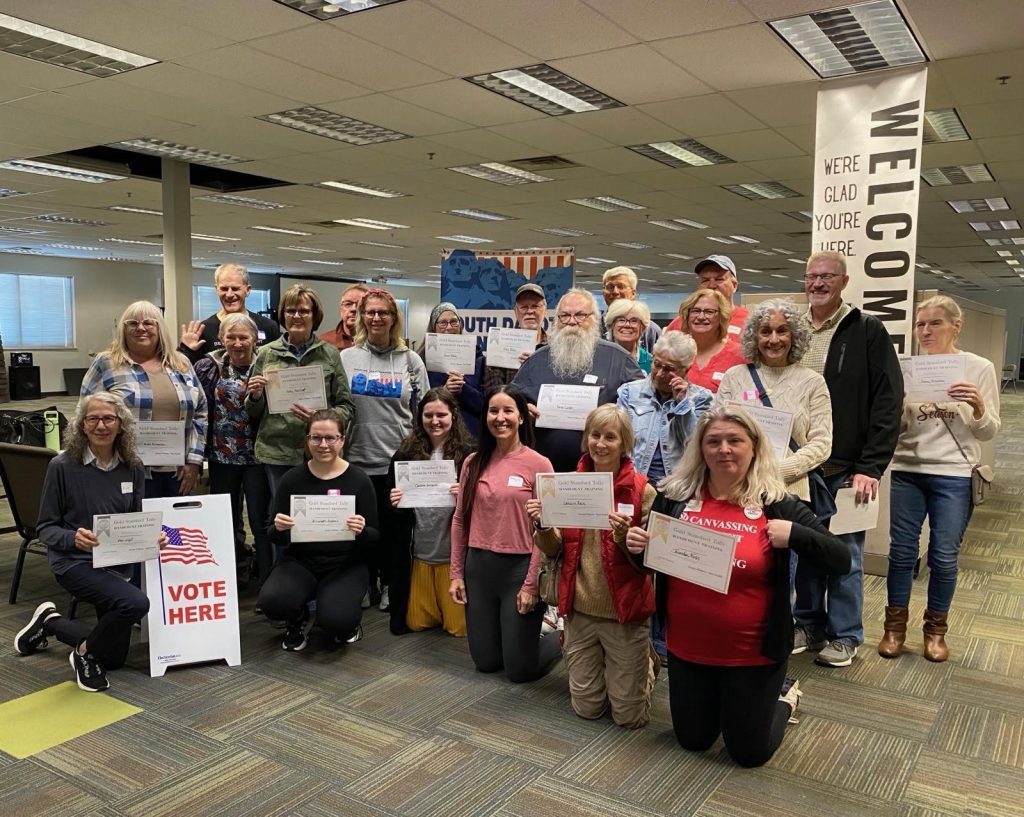
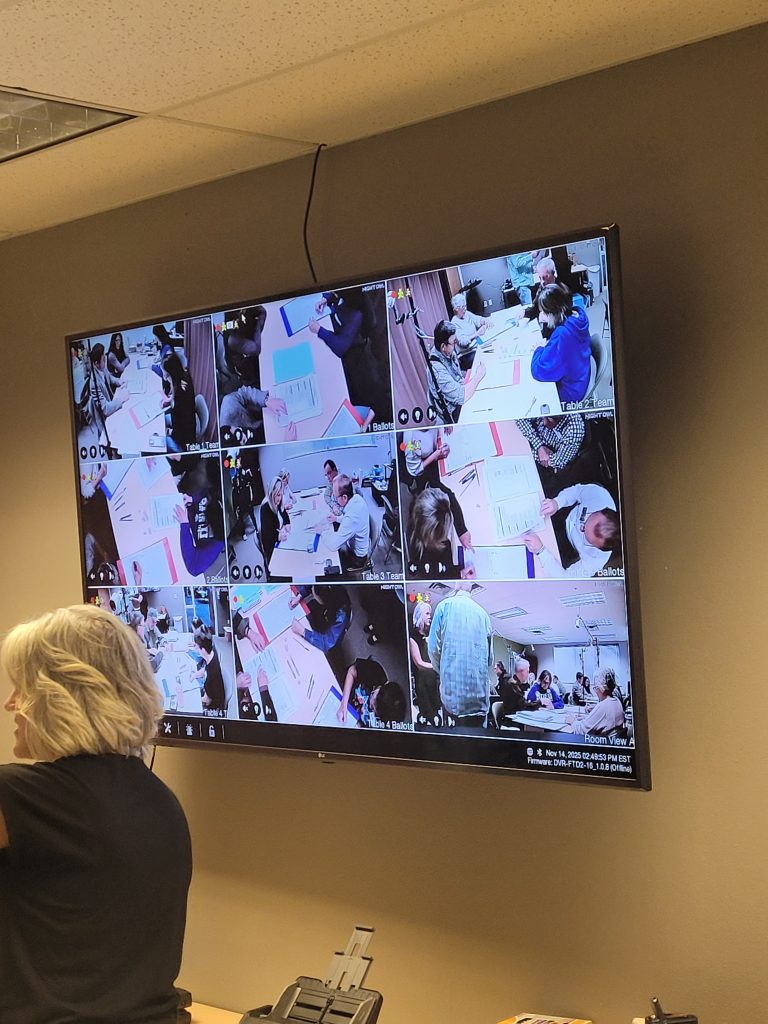
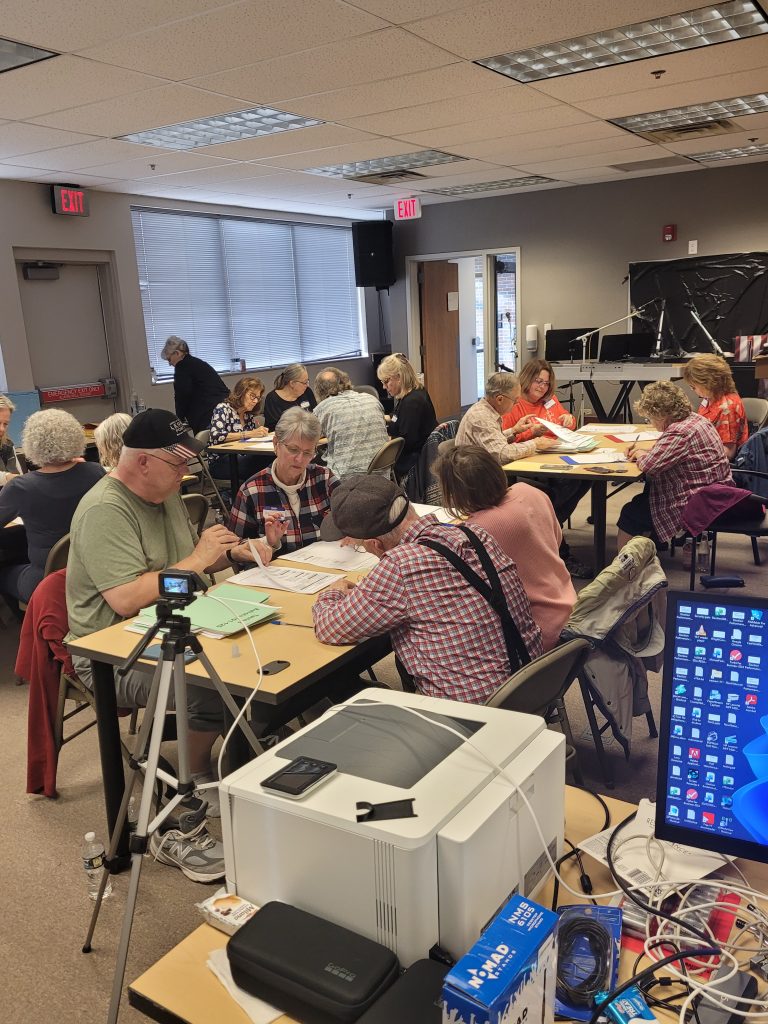
On November 14–15, 2025, more than 110 citizens from four states gathered on two weeks’ notice to conduct a full-scale mock election and optimization tests. Using real ballots from past elections, volunteer teams hand-counted thousands of votes across 12 races with bipartisan oversight, video documentation, and rigorous reconciliation. Ninety attendees were also certified in the method.
Some of the trainees who received certification proudly display their certificates.
Key Findings
A precinct of 1,000 ballots with 12 races can be fully counted and reported in roughly 4.5 hours by four small bipartisan teams.
The process is more accurate than machine tabulation because human reviewers catch voter intent that machines routinely miss (circles instead of filled ovals, stray marks, write-ins with no filled bubble, etc.).
Reconciliation at every 25-ballot batch catches errors instantly.
Volunteers overwhelmingly preferred the transparency and reported higher confidence in the results than with any machine system they had previously experienced.
Total cost per voter is a small fraction of current electronic systems once equipment leases, software licenses, storage, and maintenance contracts are eliminated.
If this proven method can be completed on election night, at a lower cost, with greater accuracy and public trust, the primary objections for hand-counting disappear.
Test Objectives
Simulate a realistic county election hand-count for two 1,000-ballot precincts.
Refute the narrative that hand-counting is too slow, error-prone, or logistically impossible.
Identify variables that maximize speed and accuracy.
Demonstrate that decentralized, citizen-overseen hand-counting on paper is the true Gold Standard for election integrity.
Test Design
Location: A typical American polling place — a church fellowship hall in Sioux Falls, SD. Volunteers: 75+ citizens from South Dakota, Minnesota, Wyoming, and South Carolina (2 weeks’ notice). Ballots: Real hand-marked paper ballots from previous elections. Structure: Two 1,000-ballot precincts in separate rooms Room 1 (High-tech): Overhead cameras + batch scanner for digital preservation and live display.
Room 2 (Low-tech): Paper, pens, and people only. Team composition per table: four people (two callers, two talliers) with mandatory bipartisan balance. Batch size: 25 ballots — small enough for rapid reconciliation, large sufficient for efficiency. Documentation: Color-coded tally binders, chain-of-custody forms, live video, and a simple, secure web app for real-time precinct-to-county reporting.
Observed Performance (November 14 Mock Election)
• Counting began at 2:30–3:00 PM. • Facility access ended at 6:00 PM (3–3.5 hours available). • In that short window, teams completed an average of 8 races across 1,000 ballots. • Extrapolating the observed pace: a full 12-race ballot would finish in ≈4.5 hours — easily within election-night reporting windows used by most counties today.
Optimization Tests (November 15 — 83 Wisconsin ballots one race)
The tests below were conducted to optimize the process further and determine whether any specific variable could be “tweaked” to enhance productivity. Here are the results.
Test
Participants
Test ATime
Test BTime
Tally Sheet
Winner and notes
Daubing with markers versus Tally with pens
Two tables of 4 people
Daubing 4:23 & 4:34
Tally 3:29 & 3:41
Gold Standard Letter size
Tally faster; markers caused order, bleed-through, and cap management issues. Specific colors were hard to discern.
Echo results as you tally in increments of 5; one tallier reveals the cumulative total, and other echoes
Two tables of 4 people
Echo Every 5 3:27 & 3:06
Non-Echo 3:29 & 3:20
Gold Standard Letter size
Echo every number, e.g., the talliers call out the candidates’ cumulative number each time, and another tallier echoes
Two tables of 4 people
Echo every number 4:30 & 5:15
Non-Echo 3:29 & 3:20
Gold Standard Letter size
Much slower; not recommended unless required by law. Non-Echo and or Echoing 5 times beats the echo of every number.
Stack, Sort, and Count method versus the Gold Standard Tally method
Two tables of 4 people
5:15 & 5:07
3:29 & 3:20
No tally sheet needed for Stack and Sort.
Tally approx. 33% faster. Participants did not prefer this method because it was cumbersome, required excessive handling, needed more space, seemed messy, and may have required a better ballot design. Doesn’t work for school board race, e.g., pick 2 or 3, etc.
Count the entire ballot at once vs. Race-by-race (50 ballots, all races)
Two tables of 4
Tally by race I hr. 30 min.
Tally by ballot 2 hours
Count entire ballot at once vs. Race-by-race (50 ballots, all races)
Took the teams a while to get used to the ballot. Once they did, they picked up the rhythm, but tallying by race was 33% quicker.
One participant opined that the whole ballot required more brain processing, and others stated that they preferred the top-down format of the traditional tally sheet
Legal versus letter sized tally
Some participants tried the legal-sized tally sheet for a few ballots, but didn’t prefer the size and the amount of hand movement required.
Clear winners: Race-by-race counting on letter-sized tally sheets with optional “echo every 5” reconciliation.
Volunteer Feedback (universal themes)
“I’ve never felt more confident that every vote was counted exactly as the voter intended.”
“You can see everything — no black box.”
“I would do this on election day in a heartbeat.”
“This is what it looks like for the people to take control of their elections.”
Cost Comparison
Current electronic systems in most counties: $500,000–$2M+ every 8–10 years for equipment, plus annual licensing, maintenance, and programming. Our cost estimates show that the Gold Standard Hand-count method can be deployed at a much lower cost (no more than 30% of the current system’s price), saving counties and states millions of dollars.
Estimated Savings of 70% while dramatically increasing transparency and trust.
Interested? Watch this video to hear about this great endeavor from the state leaders who participated from Minnesota, South Dakota, Wyoming, and South Carolina.
Are we going to keep letting them steal our voice with rigged machines — or are we finally going to take our elections back?
The Gold Standard works. It’s time to use it — or lose our Constitutional Republic.
Julie Baker and Laura Scharr traveled to York County to present to over 100 enthused patriots from the York GOP. They all participated in training for the Gold Standard Tally method and counted 50 ballots. Here are the videos from the presentations and the hand count.
In the video below, after a brief introduction by team leader Laura Scharr, Julie Baker summarizes the myriad reasons why we must abolish electronic voting.
Below, Laura discusses how our state can move to a Gold Standard and trains the room on the Gold Standard Tally Method. She calls out 25 ballots.
In this video, the subsequent 25 ballots are placed on the front table, and they attempt to test the system with two talliers on one side of the table and two people on the other side (a Caller and an observer). Note that they start this next batch with the red pen. The count was done in minutes with NO errors.
If you would like your county to train in the gold standard method, contact us at scsafeelections@zohomail.com.
Electronic voting—using computers to cast, count, and manage votes—sounds futuristic and efficient. But it’s a terrible idea, riddled with flaws that undermine the integrity of elections. From complexity to vulnerability, the risks are overwhelming. Let’s break down why electronic voting, in all its forms, fails to deliver secure and trustworthy elections, and why alternatives like blockchain and mobile voting don’t solve the problem.
The Core Problems with Electronic Voting
Complexity: The Enemy of Security
In cybersecurity, complexity is a death knell for security. The more intricate a system, the harder it is to secure. Modern electronic voting systems are a labyrinth of components—hardware, software, and networks—each a potential attack vector.
Consider this: today’s voting machines rely on millions of lines of code—3 to 4 million, to be precise—just to count votes. That’s absurd. Any developer will tell you that counting votes shouldn’t require such bloated software. Analyzing this much code for vulnerabilities is a Herculean task, taking years. And with every update, the process starts over. It’s almost as if the systems are designed to evade scrutiny, cloaked in unnecessary complexity.
Centralization: Loss of Local Control
Centralized voting systems strip away local control, handing power to distant entities. Federal involvement in elections—through agencies like CISA, ISACs, the Election Assistance Commission (EAC), and laws like HAVA—introduces risks. Tools like Albert sensors and the Center for Internet Security further erode local oversight. Even at the state level, centralization is a problem. South Carolina, for example, runs a fully centralized voting system from Columbia. When control is concentrated, voters lose their grip on the process. Can centralized control ever be trusted in elections?
Outsourced: Who’s Really in Charge?
Our elections are largely outsourced to private companies like ES&S, Dominion, and Hart InterCivic, many of which are owned by private equity firms. This raises serious questions about transparency. Who are the investors? What’s their security posture? We don’t know, because these companies operate in the shadows, often relying on other third parties—some not even based in the U.S. With so much of the process outsourced, local control is a myth.
Opaque: Black Boxes We Can’t Trust
Electronic voting systems are black boxes. The source code is proprietary, not open-source, so no one outside the companies can inspect it. You can’t pop open the machines to check the hardware either. Is there a cellular modem inside? No way to know. Cast Vote Records (CVRs) and audit logs are often inaccessible, and private companies aren’t subject to FOIA requests. Without transparency or the ability to audit, how can we trust the results?
Vulnerable: A Hacker’s Playground
Software is inherently vulnerable. Developers make mistakes, and those mistakes become exploitable weaknesses. Every update introduces new vulnerabilities. Even air-gapped systems—those supposedly isolated from networks—can be compromised via infected USB drives. No electronic system can ever be 100% secure. Bad actors can manipulate software in real time, leaving no trace. The risks are not theoretical; they’re inevitable.
Can Blockchain Save the Day?
Blockchain—a decentralized, transparent, and immutable digital ledger—sounds like a dream solution for elections. It’s used for cryptocurrencies like Bitcoin and Ethereum, as well as real estate and financial transactions. Its appeal for voting is obvious: a secure, tamper-resistant system with no central authority. But is it really the answer?
The Blockchain Mirage
Blockchain isn’t a silver bullet. It’s not just the ledger; it’s the entire ecosystem—software, hardware, third-party integrations, and cryptographic key management—that introduces complexity. And complexity, as we’ve established, breeds insecurity. Blockchain systems can be public, private, or hybrid, permissioned or permissionless, centralized or decentralized. The devil’s in the implementation.
Real-world attacks on blockchain systems prove their vulnerability. Hackers have targeted wallets, cryptographic keys, consensus mechanisms (like 51% attacks), networking protocols (Sybil, Eclipse, DDoS), APIs, decentralized apps, exchanges, smart contracts, and even the foundational blockchain software. Losses have reached billions. Where there’s value—whether money or votes—attackers will follow. Nation-states, too, have a vested interest in controlling or disrupting elections. A truly decentralized, transparent blockchain for voting? Don’t hold your breath—governments like centralized control, as seen in Romania’s 2020 and 2024 elections, which used the EU’s centrally controlled blockchain.
Mobile Voting: A Disaster in the Making
Mobile voting—casting ballots via smartphone—sounds convenient, but it’s a nightmare. A group funded by Tusk Philanthropies is developing a mobile voting system, potentially for use in upcoming midterms. Here’s why it’s a terrible idea:
Partisan Roots: Despite claims of non-partisanship, the developers lean left, raising concerns about bias.
No Security Gains: The system aims to be “as secure” as current voting systems—which, as we’ve seen, are far from secure.
Shady Ties: The cryptography has links to the NSA, DARPA, and Microsoft, and foreign third parties, like a Danish company, are involved in development.
Complexity Overload: It’s as complex as, if not more than, existing systems, with all the same vulnerabilities.
Weak Authentication: Relying on SMS or facial recognition opens the door to fraud via synthetic identities and cell phone farms.
Mail-in Voting 2.0: The system is pitched as a replacement for mail-in voting, which President Trump has criticized. It’s essentially mail-in voting on steroids, amplifying the risks of fraud.
The claim that voters can track their ballots “all the way through” falls apart when ballots are transferred to an “air-gapped” system for printing and tallying, breaking the chain of transparency.
The Bottom Line: Electronic Voting is Irredeemable
Whether it’s current systems, blockchain, or mobile voting, electronic voting is plagued by the same issues:
Complexity: All these systems are overly complex, creating countless attack surfaces.
Centralization: Implementation matters, but nation-states and private entities prefer control over transparency.
Opacity: Lack of access to code, hardware, or audit logs undermines trust.
Vulnerability: Software and hardware are inherently flawed, and attackers exploit those flaws.
Outsourcing: Private companies, often with opaque ownership, control the process, eroding local oversight.
With the rise of AI and quantum computing, these vulnerabilities will only grow. Banks set aside millions for fraud and buy cyber insurance because breaches are inevitable. But elections aren’t like banks—you can’t tolerate any fraud. You get one shot, and the system must be 100% secure. That’s impossible with electronic voting.
The Solution: Back to Basics
Electronic voting, in all its forms, enables cheating at scale. Blockchain and mobile voting are shiny distractions, but they’re just as flawed as current systems. The only way to ensure secure, transparent, and trustworthy elections is to return to paper. Hand-marked, hand-counted paper ballots are simple, auditable, and resistant to large-scale fraud.
Say no to blockchain voting. Say no to mobile voting. Say yes to paper. It’s not glamorous, but it’s the only way to protect our elections.
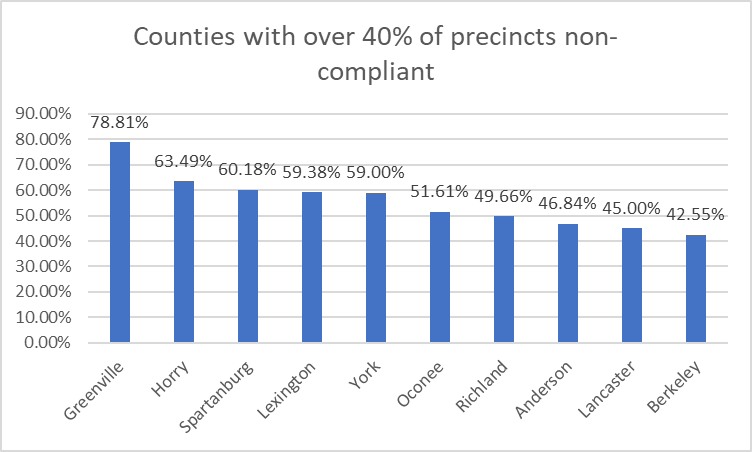
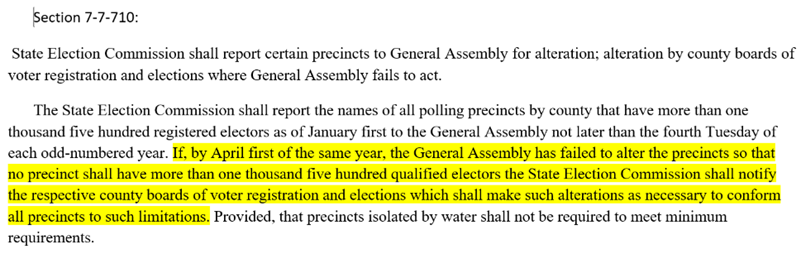
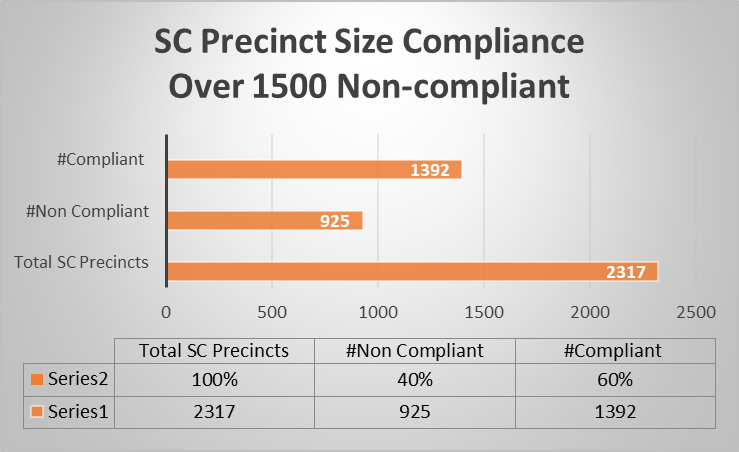
Are you tired of waiting in long lines on Election Day? In South Carolina, the root cause may be precincts that are too large. State law (Section 7-7-710) mandates that precincts with over 1,500 registered voters must be resized, yet 40% of precincts—approximately 925 out of 2,317 across 46 counties—exceed this limit (and 40% of counties are non-compliant). Some, like Longcreek in Richland County, with a staggering 6,238 voters, have violated this law for years. This widespread non-compliance undermines election integrity, causes voter frustration, and risks disenfranchisement.
The Scope of the Problem
Counties like Greenville (78.8% non-compliant), Horry (63.5%), Spartanburg (60.2%), Lexington (59.4%), and York (59%) lead the state in oversized precincts. Shockingly, 15 precincts have over 5,000 voters, and 39 exceed 4,000. For example, precincts like Fort Mill No. 2 in York County (5,523 voters) and Johns Island 2 in Charleston County (6,040 voters) far surpass the legal limit, creating overcrowded polling stations and long wait times.
From 2021 to 2024, only about 15 precincts significantly reduced their size to approach the 1,500-voter mandate. Alarmingly, 30% of non-compliant precincts increased in size during this period. Here are just a few examples that illustrate this trend:
Voter Counts in Select South Carolina Precincts (2021–2024)
County
Precinct
2021
2022
2024
Lancaster
Black Horse Run
4,539
4,699
5,179
Horry
Socastee #3
4,300
4,323
5,132
Richland
Pontiac 2
2,761
3,075
4,328
Berkeley
Cane Bay
3,135
3,389
4,042
Greenville
Ranch Creek
2,940
3,001
4,033
Data sourced from voter rolls, reflecting changes in registered voters from 2021 to 2024.
Even precincts that reduced their size between election years remain well above the legal threshold, highlighting a systemic failure to comply with the law.
Why It Matters
Oversized precincts create:
Long wait times: Crowded polling stations discourage voters, particularly seniors and those with limited time.
Voter suppression: Long lines and logistical challenges can reduce turnout, undermining fair elections.
Barriers to hand-counting: Our group advocates for hand-marked, hand-counted paper ballots at the precinct level to eliminate the fraud-prone electronic voting system and centralized counting. Oversized precincts make this process impractical, risking delays that could extend past midnight.
The State Election Commission (SEC) and General Assembly have failed to enforce Section 7-7-710, often issuing waivers that prioritize administrative convenience over voter rights. Early voting and voting centers, sometimes used to justify oversized precincts, increase fraud risks due to the comingling of ballots, among other things, and should be eliminated. Non-compliance not only defies the law but also erodes voter access and local control over elections.
A Pattern of Neglect
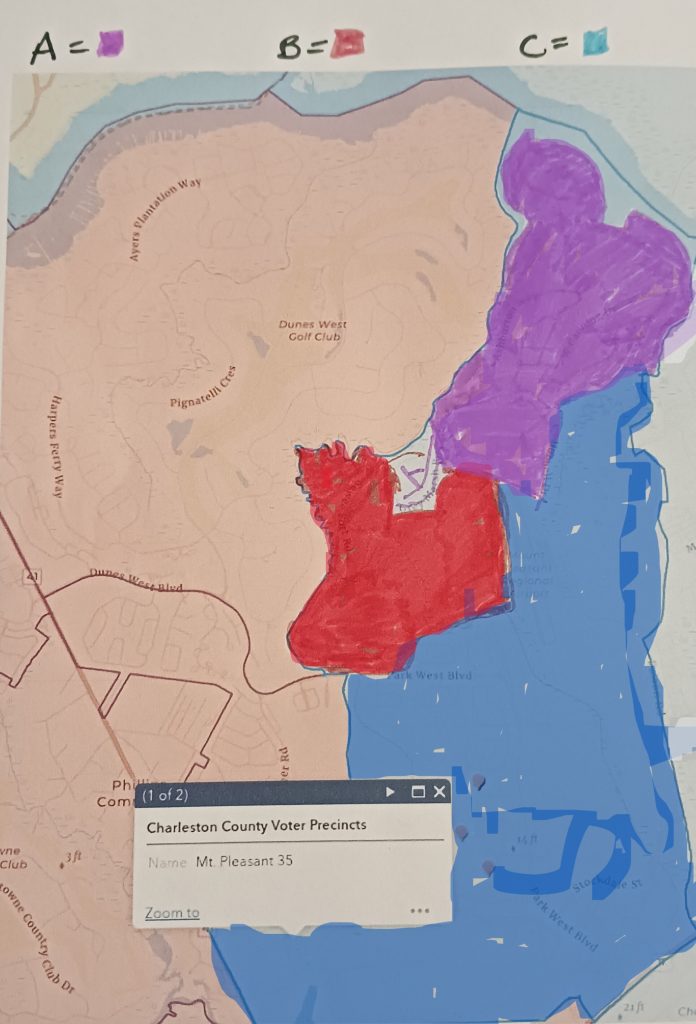
Analysis of voter rolls from 2021 to 2024 suggests an intentional trend of maintaining or even increasing precinct sizes. The SC Election Commission and General Assembly have allowed counties to flout the law, with no clear accountability. For instance, one analyst manually redrew one of the worst-offending precincts (Mt Pleasant 35) using the GIS Map, road names, and precinct names to query the database (Post 2024 General) and determine the roads for each division of the precinct. Without using the GIS software, it took her 90 minutes, and she estimated that all of the precincts over 3,000 would take 15 days for one person to complete, proving that compliance is not tricky, but feasible, easy, and straightforward. So why hasn’t it been done? It could undoubtedly be done far more quickly with GIS computer software.
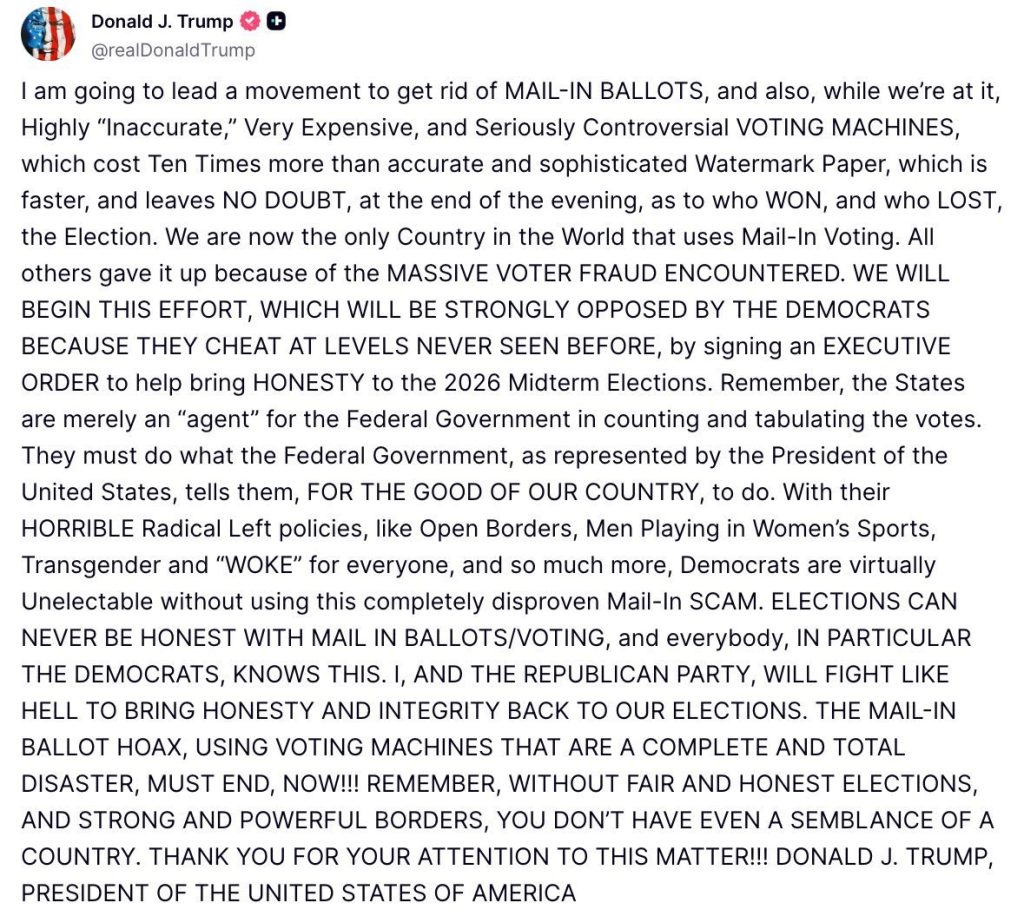
President Trump seems poised to eliminate mail-in ballots and machines, which would portend that we will be hand-counting, hand-marked ballots. To make this happen, we must keep precincts under 1500.
With President Trump calling for action to eliminate electronics in our election system, the time has come to reduce precinct size to ensure hand-counting is feasible.
The Path Forward
Enforcing Section 7-7-710 is critical to restoring fair, transparent, and community-driven elections. Smaller precincts would:
Reduce wait times and improve voter access.
Enable secure, hand-counted paper ballots on Election Day.
Eliminate fraud-prone voting centers and ensure decentralized elections.
South Carolina’s leaders must act now to:
Redraw precincts: Use GIS mapping to resize precincts to meet the 1,500-voter limit.
End waivers: Stop excusing non-compliance and hold counties accountable.
Prioritize voters: Focus on accessibility and integrity, not administrative convenience.
The people’s voice—not county administrators’ preferences—must guide our elections. Demand action from the SEC and General Assembly to enforce the law and ensure every South Carolinian’s vote is counted fairly and efficiently.
The table below is data based on voter rolls as of 11/10/2024, post-2024 General Election. Note: 2 precincts with one voter and no name were excluded from the 2,319 total precincts analyzed. We included a buffer of 10% or 1650 and flagged any precincts exceeding that number.
Data is based on a database purchased on 11/10/24, just after the 2024 General Election. These numbers would be higher if you used the strict 1,500 legal limit.
On May 31st, over 100 grassroots activists and election experts gathered in Dallas, Texas, to demonstrate several hand-count methods for ballots. We collaborated with multiple state leaders and educated many interested parties on the Gold Standard for elections, which is our recommended approach for re-engineering the four phases of our election ecosystem from registration to reporting. All attendees had a lot of fun. Here is a short highlight reel of the event.
We were able to demonstrate our favored method, which we have fine-tuned over the last two years. This method is simple, easy, and straightforward to train. Our recommendation is for a second poll worker crew to come in after the polls close to count. These workers can be identified and trained by the parties and election officials, but should be recruited from the general public. Another option is to create a system similar to the jury selection system. In recent trainings conducted with young and old citizens, we had minimal, if any, errors after a quick 15-minute training.
The method is very secure and can be double-checked and verified by scanning the batch of ballots before the count, and or recording with a phone or iPad. To count by midnight, we recommend that precincts be kept to a maximum of 1500. The biggest general elections would result in approximately 1,000 ballots based on turnout. This would require 3-4 teams of 4 to count per precinct, and they could easily finish in no more than 4 hours.
Here is a quick video of our Gold Standard Tally method:
For more information about the Gold Standard Method and our proposed executive order for elections that was sent to the Trump administration, go to these links:
Click above to listen to the More than Medicine podcast.
Team founder Laura Scharr was honored to speak with Dr. Jackson, host of the “More Than Medicine” podcast. She describes the purpose and impact of the Gold Standard Expo in Dallas, Texas, where many teams demonstrated methods to hand-count, hand-mark paper ballots.
Before the expo, we also produced the piece below to highlight the benefits of accessible, secure, transparent, and verifiable elections. Please spread this far and wide.